
Silica gel (100 g)
| Category: | Filament storage |
|---|
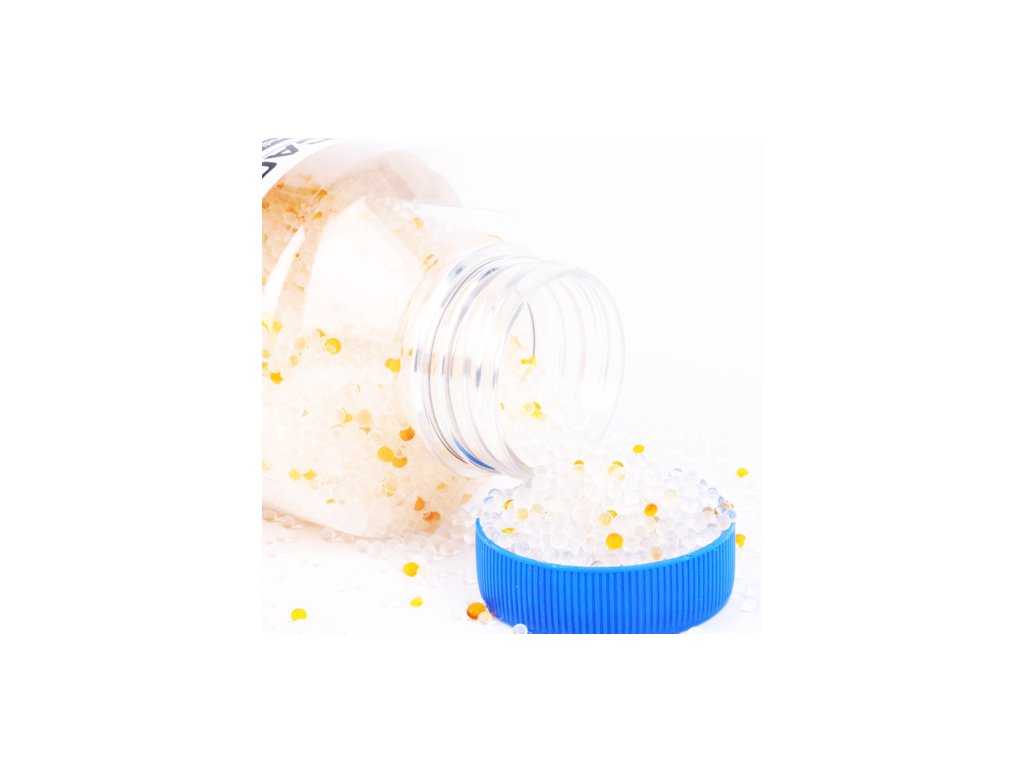
Silica gel is supplied in a ZIP bag. The number of pieces in the basket are multiples of 100 grams.
Silica gel is suitable for additional drying boxes for AMS.
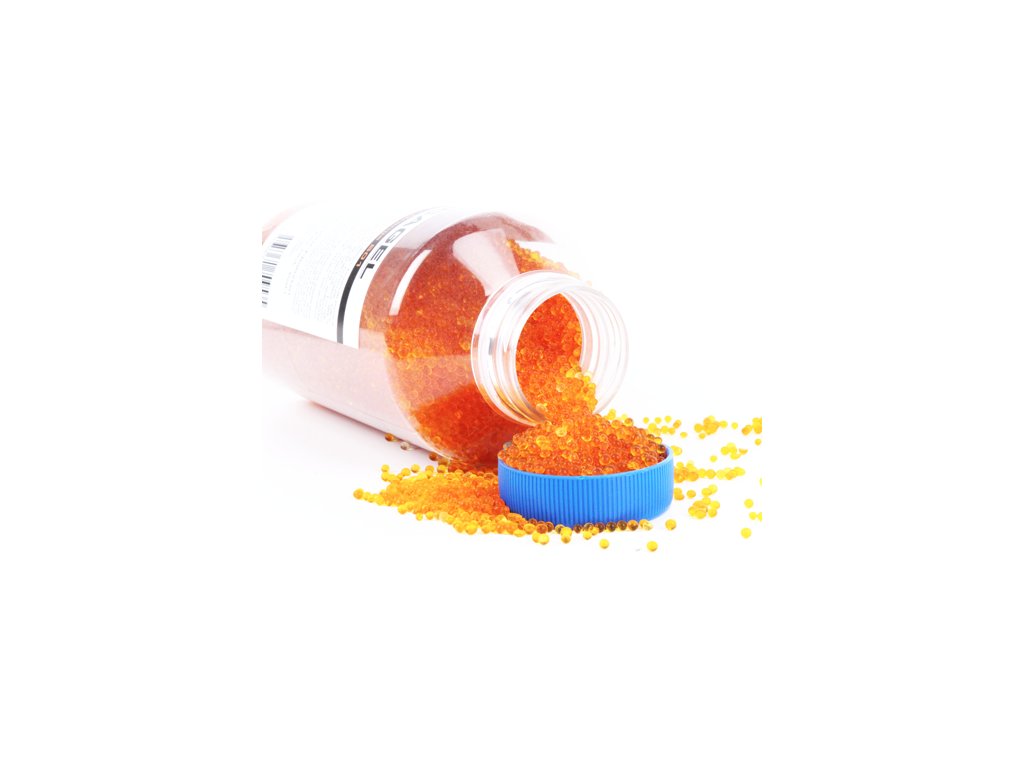
Silica gel - orange - color indicates moisture
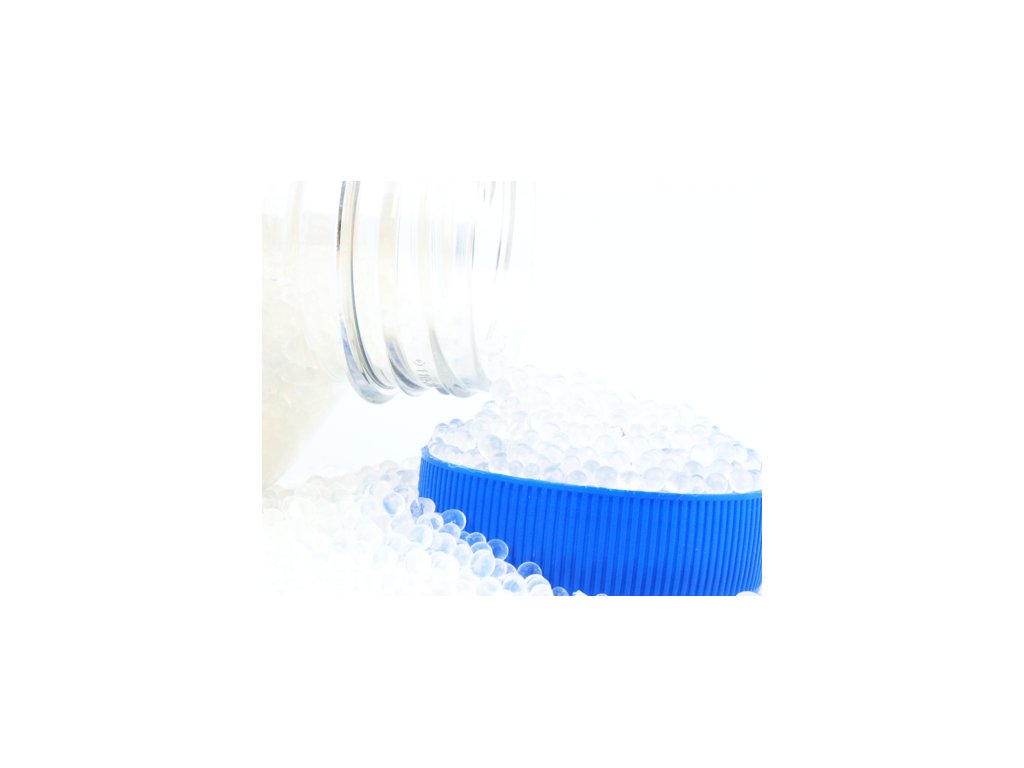
Silica gel - transparent - cannot be seen inside
Silica gel - mix - mix of transparent and orange silica gel
Silica gel SO1 - orange
High-quality silica gel with a moisture saturation indicator. Its advantage over classic silica gel is its ability to indicate moisture saturation by color, thus providing timely warning of the need for regeneration.
Orange silica gel is a very effective desiccant that can be reused. For industrial, domestic, and laboratory use. Absorbs gases and vapors. Dries the air, removes moisture from gases, and absorbs vapors. The 2-4 mm diameter beads are made of highly active silica gel with a purity of at least 99.5% SiO2 (based on gel without water). The beads are glassy in appearance, hard, odorless, insoluble, and electrically non-conductive. High adsorption capacity is ensured by the surface area of microscopic pores with an active surface area of 800 m²/g. The free desiccant reduces moisture and thus prevents product deterioration due to corrosion and mold. It is effective even at high air flow rates. It can be regenerated and reused without significant loss of parameters.
Regeneration at a temperature of 130-160 °C. Drying time in a microwave oven at 650 W is approx. 1-10 minutes, depending on the amount and height of the silica gel layer (1 kg approx. 10 minutes). Other areas of application and possible uses Dehumidifiers, packaging, transport packaging, drying walls, screeds, carpets and furniture, household and hobby items, camping, sports equipment, boats/yachts, storage of filaments for 3D printing, and much more. By using excess silica gel in a closed container, a relative humidity of less than 10% can be achieved in the container. More about the use of silica gel.
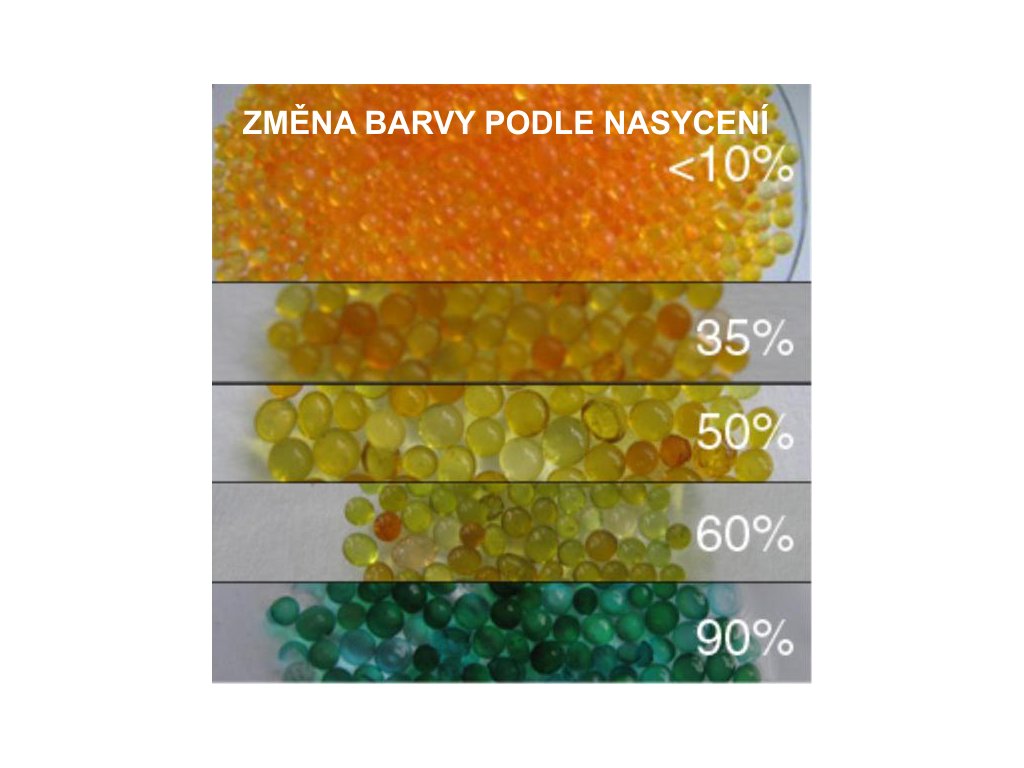
Once the SO1 silica gel beads absorb a certain amount of moisture, they change color from orange to green:
• 0% orange • 8% yellow-brown (at 20 °C, min. 20% relative humidity) • 20% brown-green (at 20 °C, min. 50% relative humidity) • 30% green (at 20 °C, min. 90% relative humidity) Typical properties of SO1 silica gel • uniform bead shape (over 80% of beads have a diameter of 2 to 4 mm) • Good mechanical strength (low abrasion) • Particularly high adsorption capacity • Long service life • Good regenerability (regeneration in an oven at approx. 110 °C or in a microwave oven) • Free of cobalt chloride • Bulk density: 620-700 g/l • Specific surface area: approx. 690 sqm/g • Pore volume: approx. 0.35-0.45 ml/g • Nominal pore diameter: 25 A • Composition: SiO₂: 99.6% • Indicator: Methyl red: 0.09%
Technical description
- Transparent silica gel SG5: Bulk density: approx. 620–700 g/l
- Absorption capacity (water content in % relative to own weight) at 23(+2)°C: 20% relative humidity = approx. 11.0% 50% relative humidity = approx. 25.5% 90% relative humidity = approx. 36.0%
- Loss on ignition (at 950°C): approx. 6.7%
- Active surface area: approx. 800 m2/g
- PH: 4 - 6
- Pore diameter: 2.0-3.0 nm
- Pore volume: 0.35-0.45ml/g
- Thermal conductivity: 0.63 kJ/m.h
Silica gel regeneration, drying, and reuse
Silica gel regeneration refers to drying and reuse. The following two methods are most suitable:
1. Drying in the hot air of an electric or gas oven
Water evaporates from silica gel at temperatures above 110oC. The optimal temperature is 110-130oC. The time required for regeneration depends mainly on the weight of the silica gel being regenerated. We can tell that regeneration is complete when no more water vapor rises from the silica gel.
2. Drying in a microwave oven
In a microwave oven. Regeneration in a microwave oven is less energy-intensive (the oven does not need to be heated), but the following rules must be observed: The container must be resistant to temperatures of 200oC and must not be made of metal or plastic. The best materials are heat-resistant glass or ceramic. Reduce the oven power to 600W. Allow approximately 3 minutes for every 100g of wet silica gel. Then visually check to see if steam is still being produced. Continue only if steam is being produced. If you continue even when steam is no longer being produced, the silica gel can heat up to 240oC, start to crack, and the container may also crack due to the temperature.
The surface of the silica gel will turn orange only after it has cooled down.